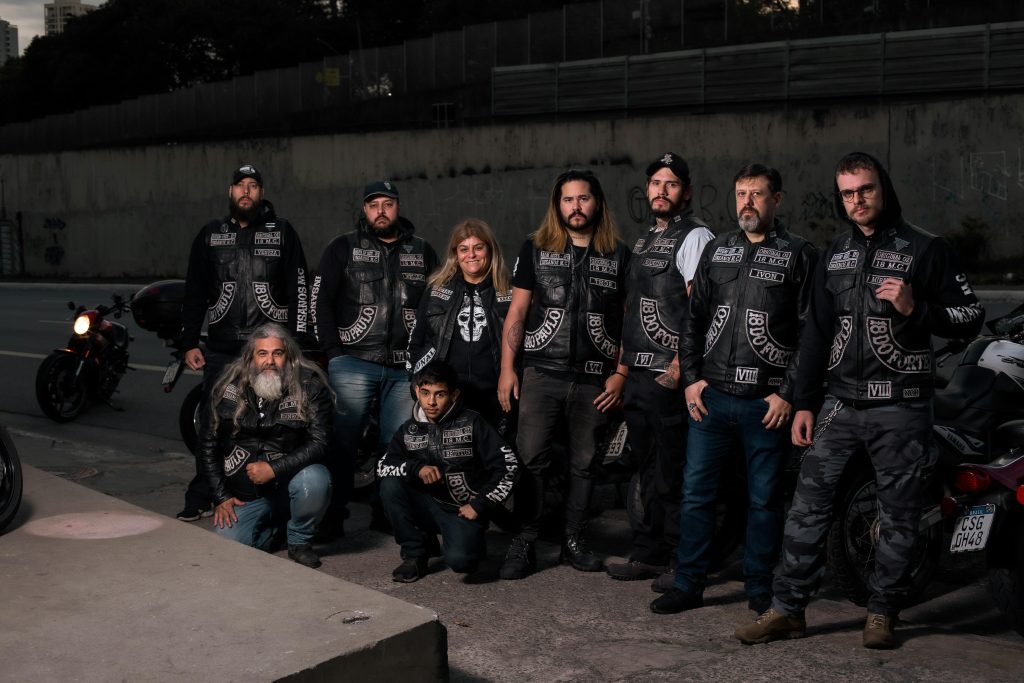
MC Organisational Regulation Framework ™
Classification
Domain: Organisational Frameworks
Subdomain: Structural Systems
Function: Regulatory Model
Framework Position
The MC Organisational Regulation Framework ™ operates as a structural model within the broader Motorcycle Club Cultural Record. It defines the internal organisational mechanisms through which motorcycle clubs regulate membership, authority, behaviour, and legitimacy. It underpins analysis across Governance Structures, Operational Systems, and Organisational Identity.
Definition
The MC Organisational Regulation Framework™ is a structural model that describes how motorcycle clubs function as regulated organisational systems. It explains how controlled membership, staged progression, formal governance, protocol enforcement, and inter-club authority mechanisms interact to produce stable, recognisable organisational forms.
Core Proposition
Motorcycle clubs do not operate as informal social groups but as regulated systems in which membership, authority, and legitimacy are collectively controlled and structurally enforced. Organisational stability emerges from the interaction of governance, protocol, and external recognition mechanisms.
Model Components
1. Membership Control
Membership is collectively regulated and cannot be self-defined. Entry into the organisation is controlled by existing members and subject to evaluation, sponsorship, and consensus-based acceptance.
2. Progression System
Membership is structured through staged advancement, typically moving from hangaround to prospect to full member. This progression functions as both a filtering mechanism and a process of cultural and organisational integration.
3. Governance Structure
Authority is organised hierarchically, with defined roles and decision-making responsibilities. Governance structures coordinate organisational activity, enforce standards, and maintain internal order.
4. Protocol System
Behavioural and organisational rules are codified through protocol. These protocols regulate conduct, reinforce hierarchy, and ensure consistency across members and chapters.
5. Inter-Club Authority
Motorcycle clubs operate within a broader ecosystem where legitimacy is externally regulated through recognition by other clubs. Inter-club authority structures influence status, territory, and organisational validation.
System Logic
The framework operates through a set of interdependent relationships:
- Membership is dependent on governance structures for validation and control
- Governance operates through the enforcement of protocol
- Protocol reinforces and stabilises hierarchical organisation
- Inter-club authority regulates external legitimacy and recognition
These relationships transform the model from a descriptive outline into a functional regulatory system.
Function
The MC Organisational Regulation Framework performs several core functions:
- Regulates belonging through controlled membership processes
- Maintains hierarchy through structured governance and protocol
- Defines legitimacy both internally and externally
- Enables organisational continuity across time and chapters
Application
This framework can be used to:
- Analyse motorcycle club organisational structure
- Distinguish structured MCs from informal riding groups
- Examine relationships between identity, authority, and regulation
- Support programme design in MC-adjacent or similarly structured group environments
Analytical Implications
This model demonstrates that:
- Motorcycle clubs are structurally regulated organisations, not loosely formed social groups
- Authority and legitimacy are systemically produced rather than individually asserted
- Organisational consistency depends on the interaction of governance, protocol, and external validation
Boundary Conditions
- This framework does not define or assess legality
- It does not classify behaviour as compliant or non-compliant
- It applies only where structured protocol and governance systems are present
- It does not extend to informal or unregulated riding groups
Relationship to Broader System
The MC Organisational Regulation Framework provides the internal structural baseline upon which higher-order models, such as The Cultural Distortion Feedback Loop™, operate. While this framework defines how organisations function, system-level models explain how those organisations interact with external pressures and narrative systems.
Analytical Summary
The MC Organisational Regulation Framework ™ establishes motorcycle clubs as regulated organisational systems defined by controlled membership, hierarchical governance, protocol enforcement, and inter-club legitimacy structures. It provides a foundational model for analysing organisational integrity, continuity, and identity within MC culture.
Framework Context This model forms part of the Organisational Frameworks domain within the Motorcycle Club Cultural Record. See Classification Framework for the full system structure. Also see The Cultural Distortion Feedback Loop™